An illustration: a flame drawn at the gravity of Earth, Mars, the Moon and orbit, with NASA's 3D model of each around it.
Fire on Earth
Every fire test NASA ran in orbit, and what was never tested.
1.00 gNASA tested this
- 2,143
- NASA fire testsread into one table
- 22.7%
- Most oxygen testedon fabric and plastic
- 30%+
- Planned for the Moonnever tested
The flame is an illustration drawn by code, not footage. Earth, Mars, the Moon and the space station are NASA's own 3D models.
In a spacecraft, there is nowhere to run.
A crew cannot open a window or step outside. Four moments NASA names when it explains why it studies fire, in its own words:
1967Apollo 1
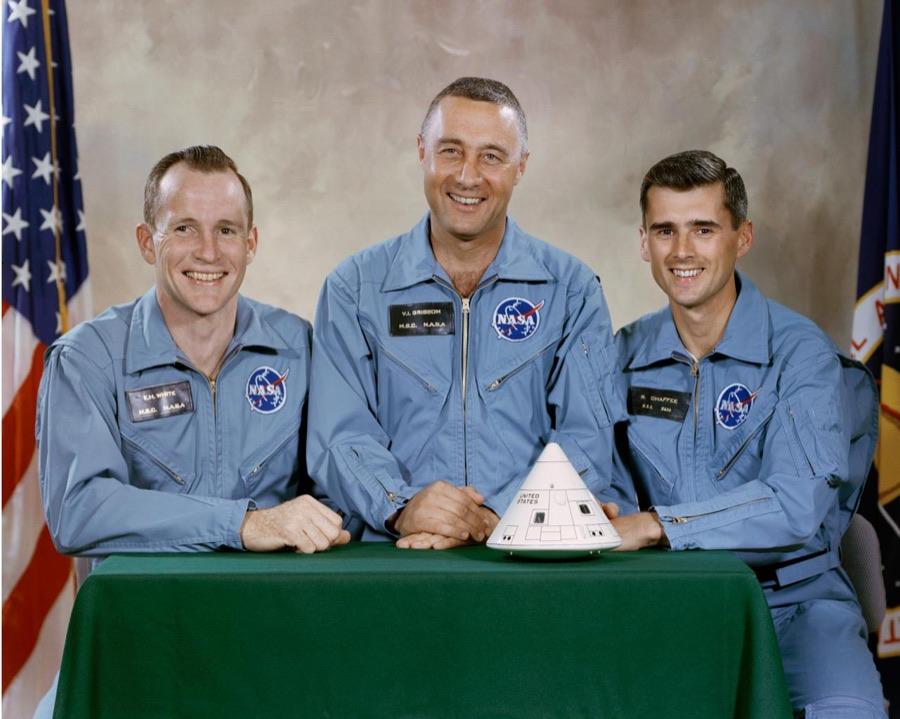
“the Apollo 1 crew died in a pre-launch test when fire erupted in their oxygen-filled spacecraft”
The Apollo 1 crew, 1966. NASA photograph. NASA's account
1970Apollo 13
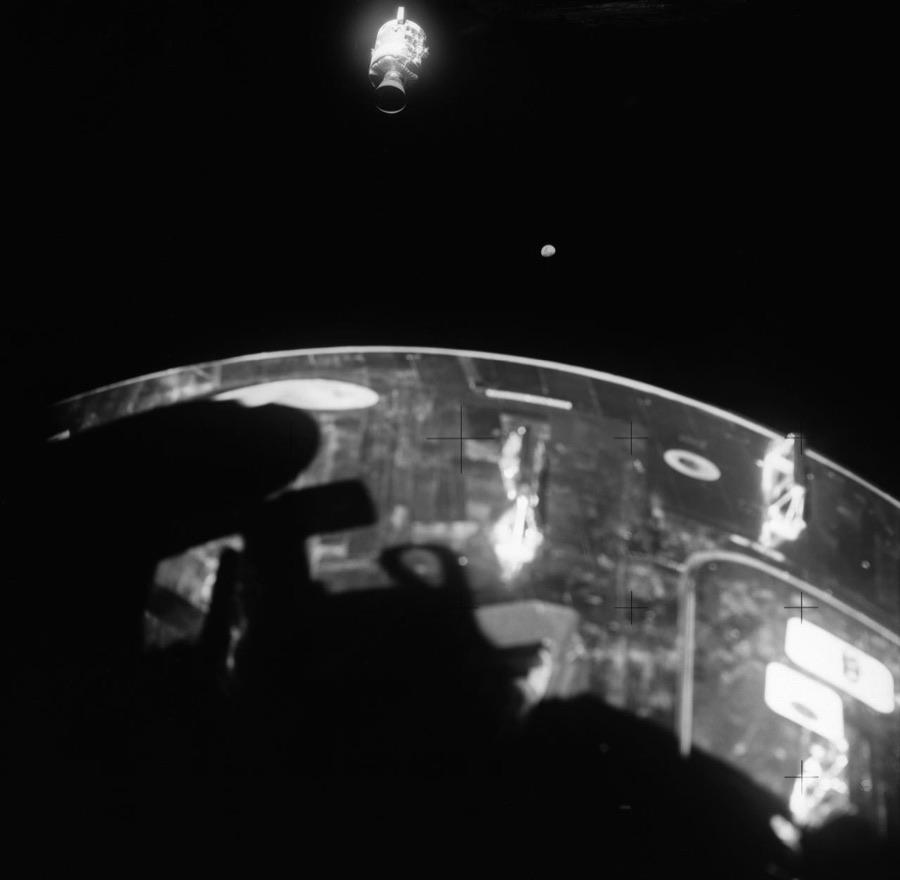
“the Apollo 13 crew endured the life-threatening results of an oxygen tank explosion on their way to the Moon”
The damaged module, photographed by its crew. NASA photograph. NASA's account
1997Mir
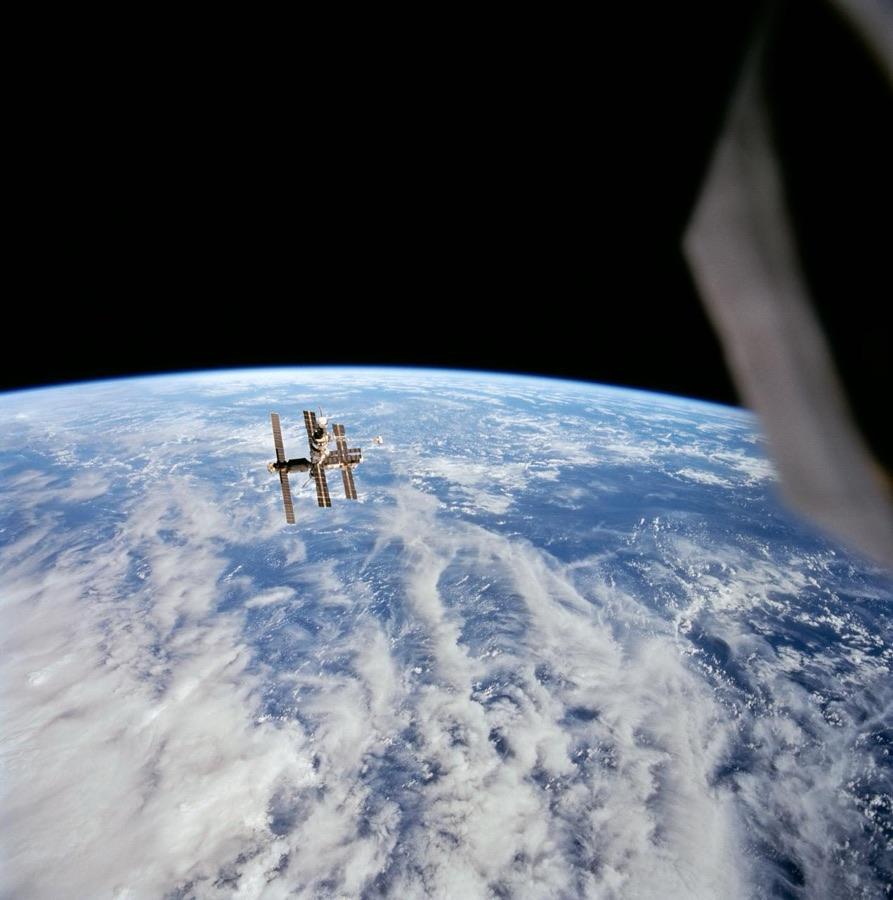
“a multinational crew survived a fire aboard the Mir space station caused by an oxygen generator failure”
Mir seen from the Space Shuttle, 1995. NASA photograph. NASA's account
2026Artemis II
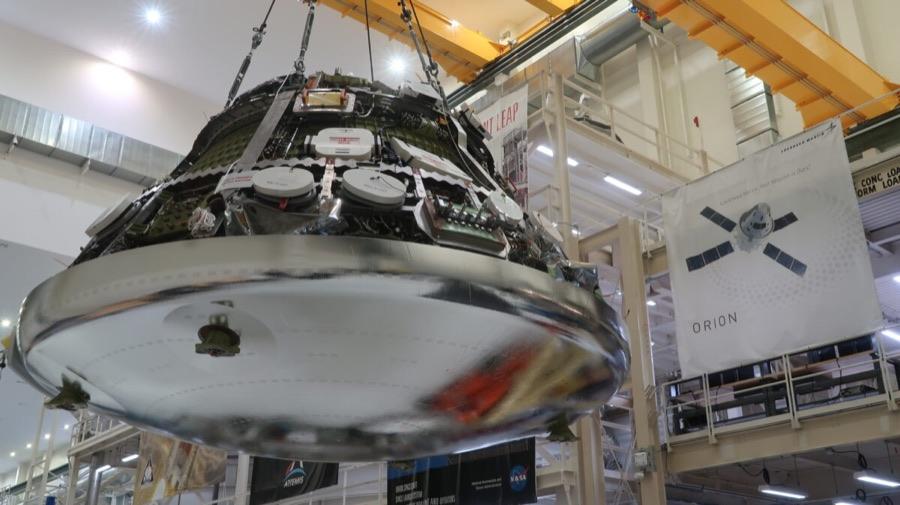
“make the fire alarm go off in your spacecraft when you’re still about 80,000 miles from home”
The Artemis II capsule in assembly, 2023. NASA photograph.
Quotations are from NASA's challenge statement. The last is the Artemis II commander, on a smoke alarm that went off during the flight.
So NASA lights real fires in space, on purpose.
It burns fabric, plastic, fuel droplets and gas inside sealed hardware in orbit, and records what happens. The results are public, but they sit in 24 separate records that are hard to find, compare and read.
- 24
- experiments in the archive
- 2,143
- test rows, read into one table
- 479
- tests you can watch on NASA's own film
Four flames you will only see in orbit
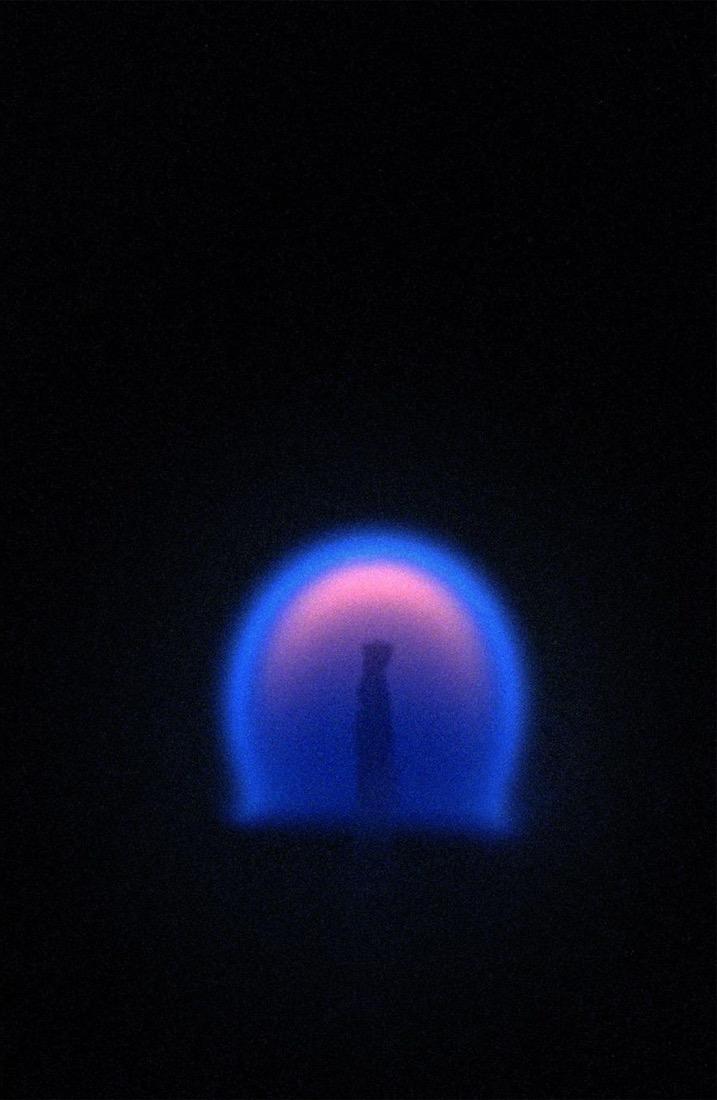 A candleWith nothing rising, the flame is a small blue dome that does not flicker.
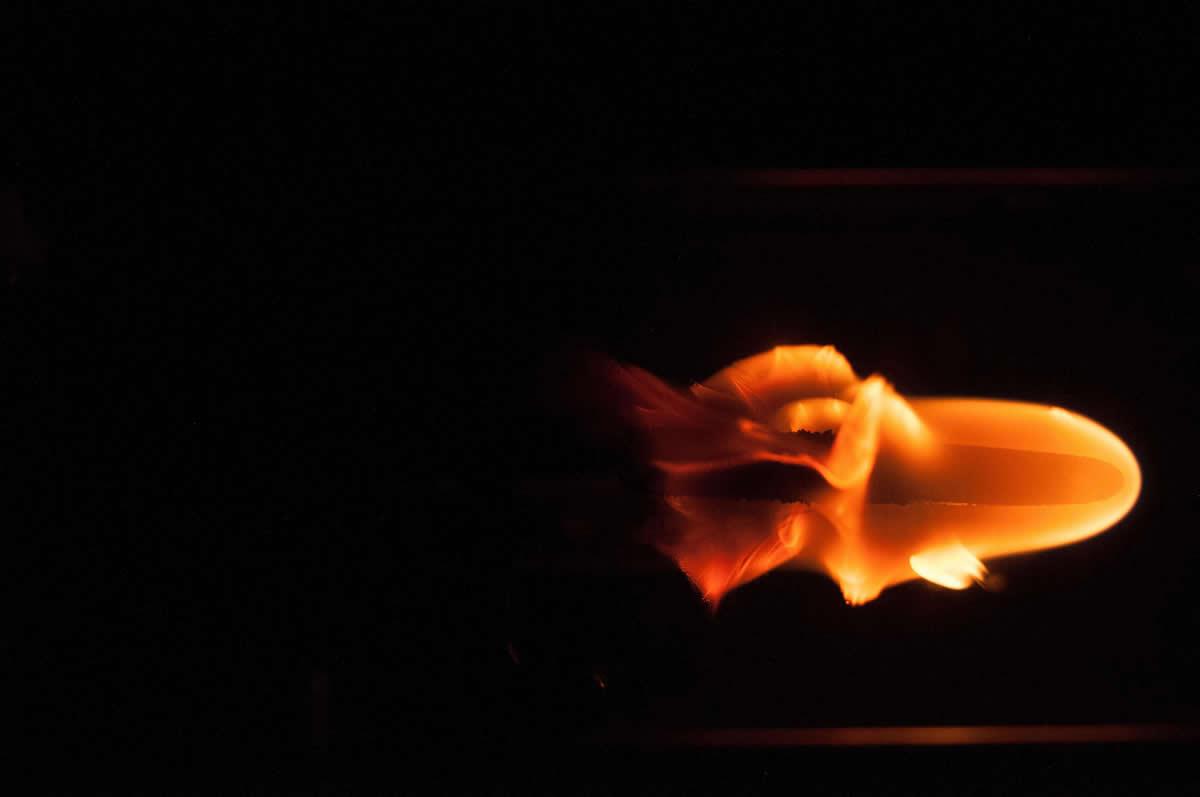 A plastic rod in a breezeIn BASS-II a fan blows air over burning acrylic. The plastic melts and bubbles, which gives the flame its ragged edge.
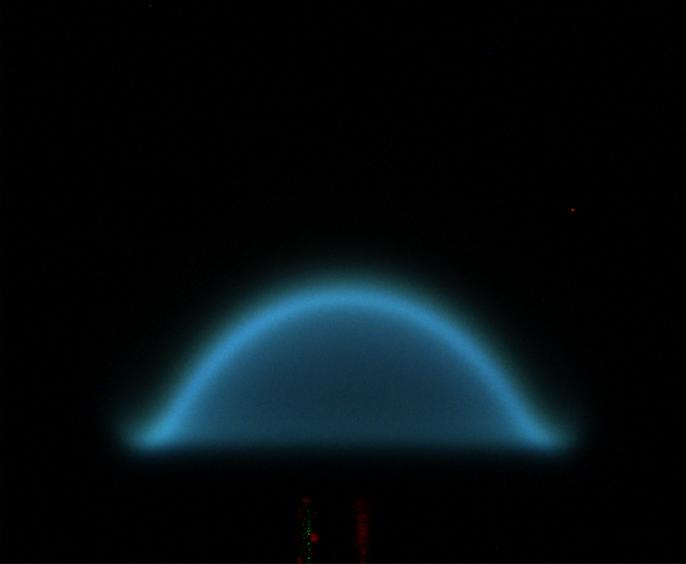 A flame pulled by electricityIn E-FIELD Flames an electric field tugs on the flame and reshapes it, standing in for weak gravity.
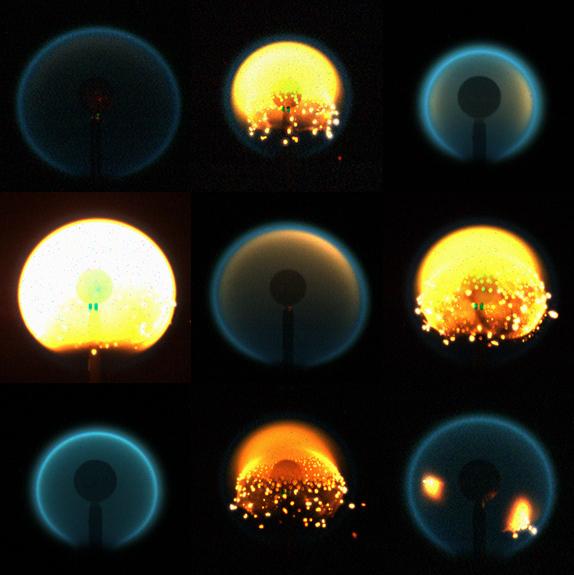 A ball of burning gasIn Flame Design, gas flames form spheres that turn from blue to sooty yellow.
NASA photographs. These are the examples NASA's own briefing for this challenge shows.
The next cabins will hold more oxygen.
More oxygen in the air makes almost everything easier to light. This is how the air changes from the space station to the Moon, and how many of NASA's tests on solid materials, such as fabric and plastic, were run in air like it.
Drag to turn it yourself
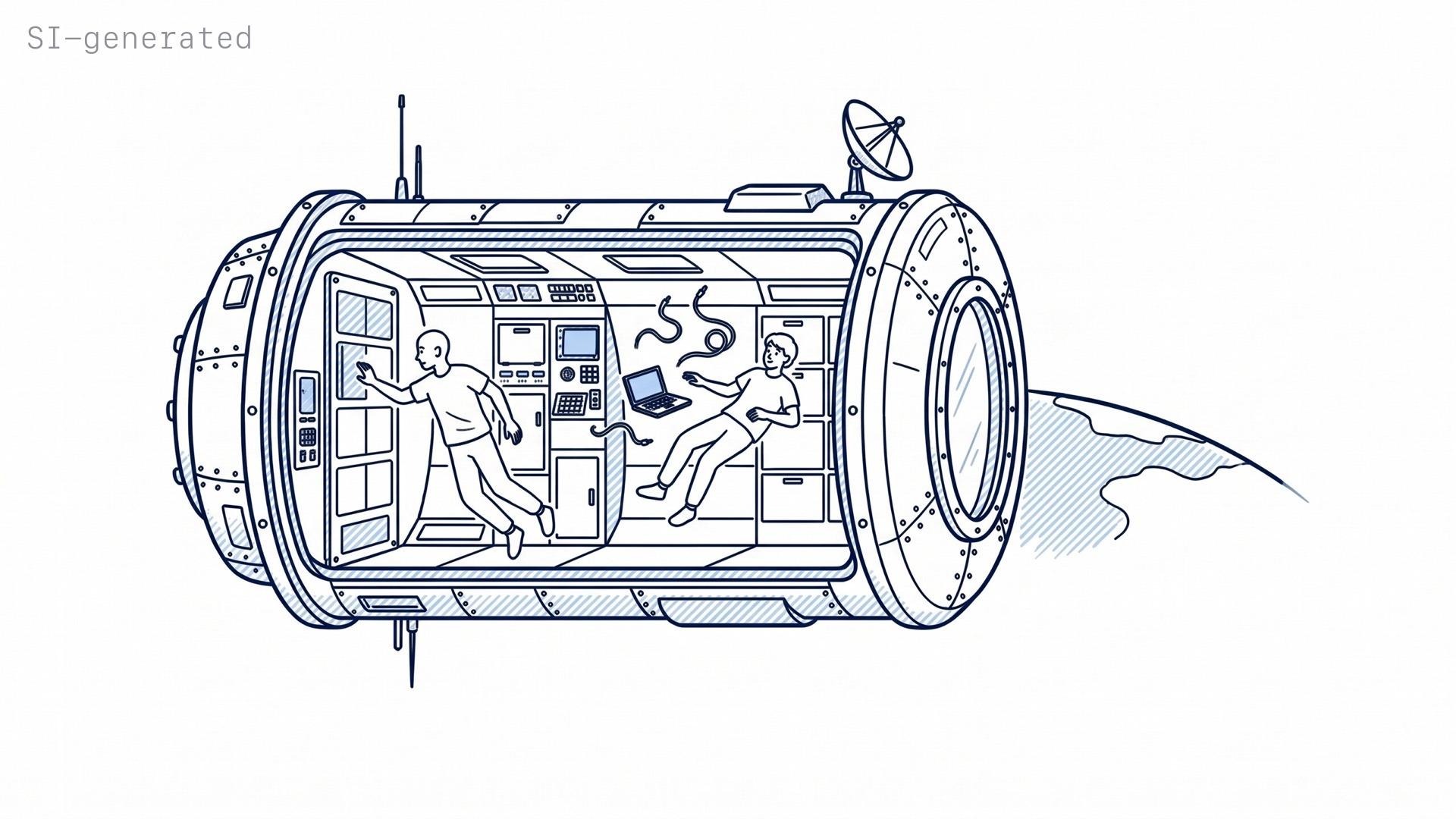 SI-generated
Space station
The same air as at sea level on Earth.
Oxygen in the air21%
at 14.7 psi
173tests on solid materials in air like this
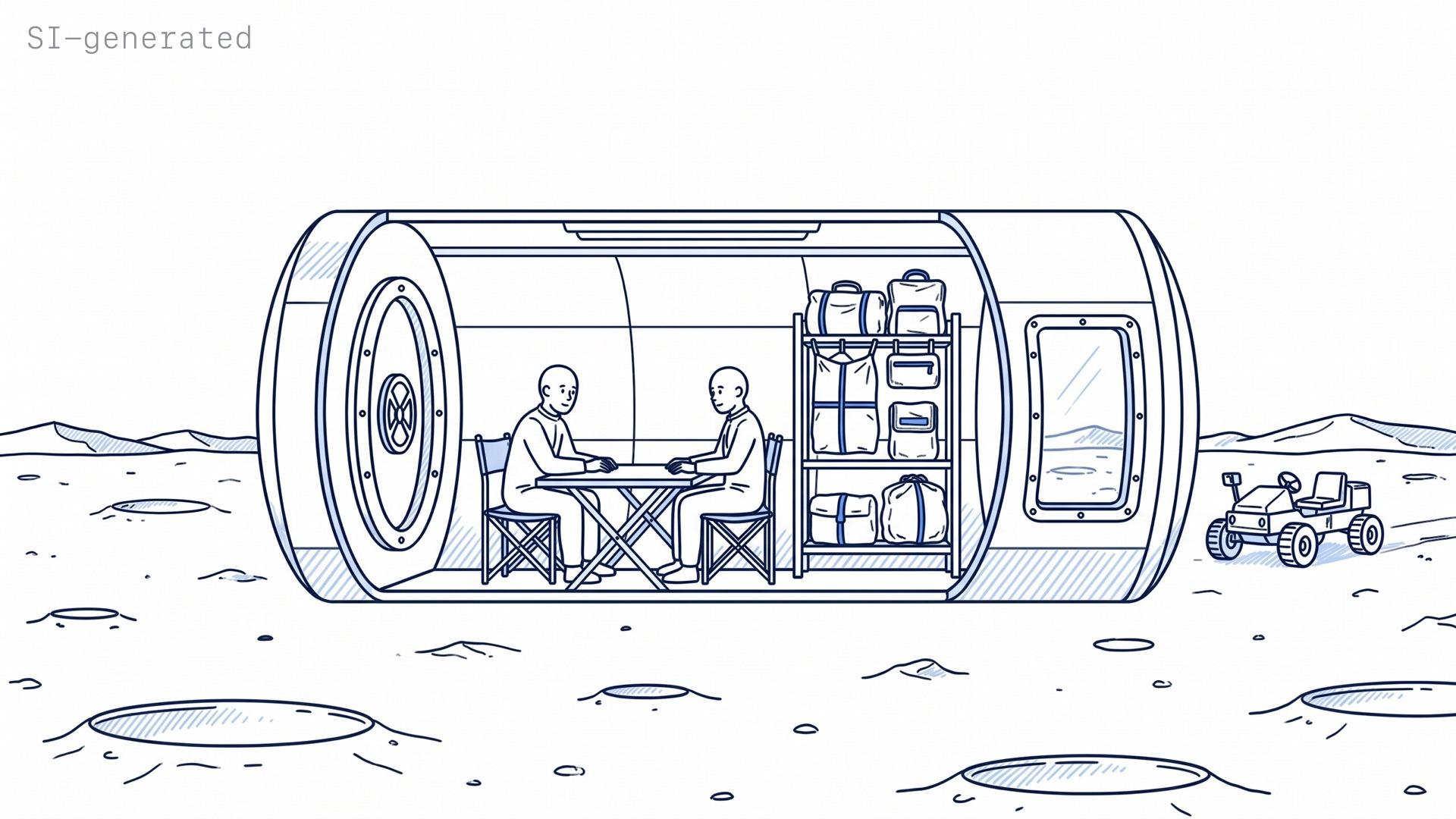 SI-generated
Moon habitat
Thinner air with more oxygen, so crews can step outside sooner.
Oxygen in the air34%
at 8.2 psi
0tests on solid materials in air like this
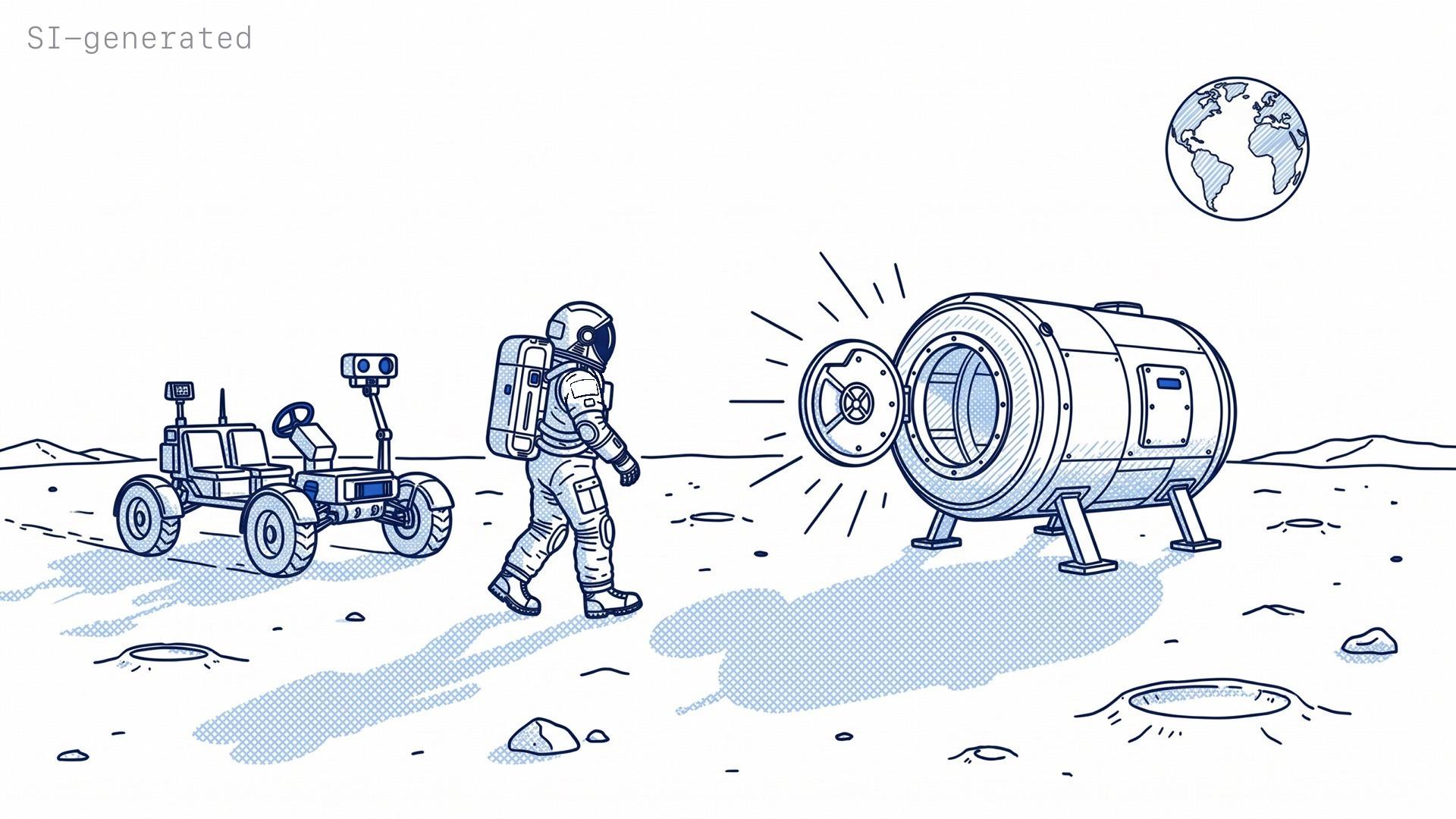 SI-generated
Spacesuit
Pure oxygen at low pressure, to keep the suit flexible.
Oxygen in the air100%
at 4.3 psi
0tests on solid materials in air like this
“Compared to Earth’s atmosphere, that’s more than a 40% increase in the oxygen concentration making materials much more flammable.” NASA challenge statement, on the Moon Base
Drawings, their animations and the white models are SI-generated concept illustrations, each marked. Photographs and footage are NASA's. The Moon habitat figures are NASA's exploration atmosphere. Air like this means within 3 points of oxygen and a 25% change in pressure.
Three ways in
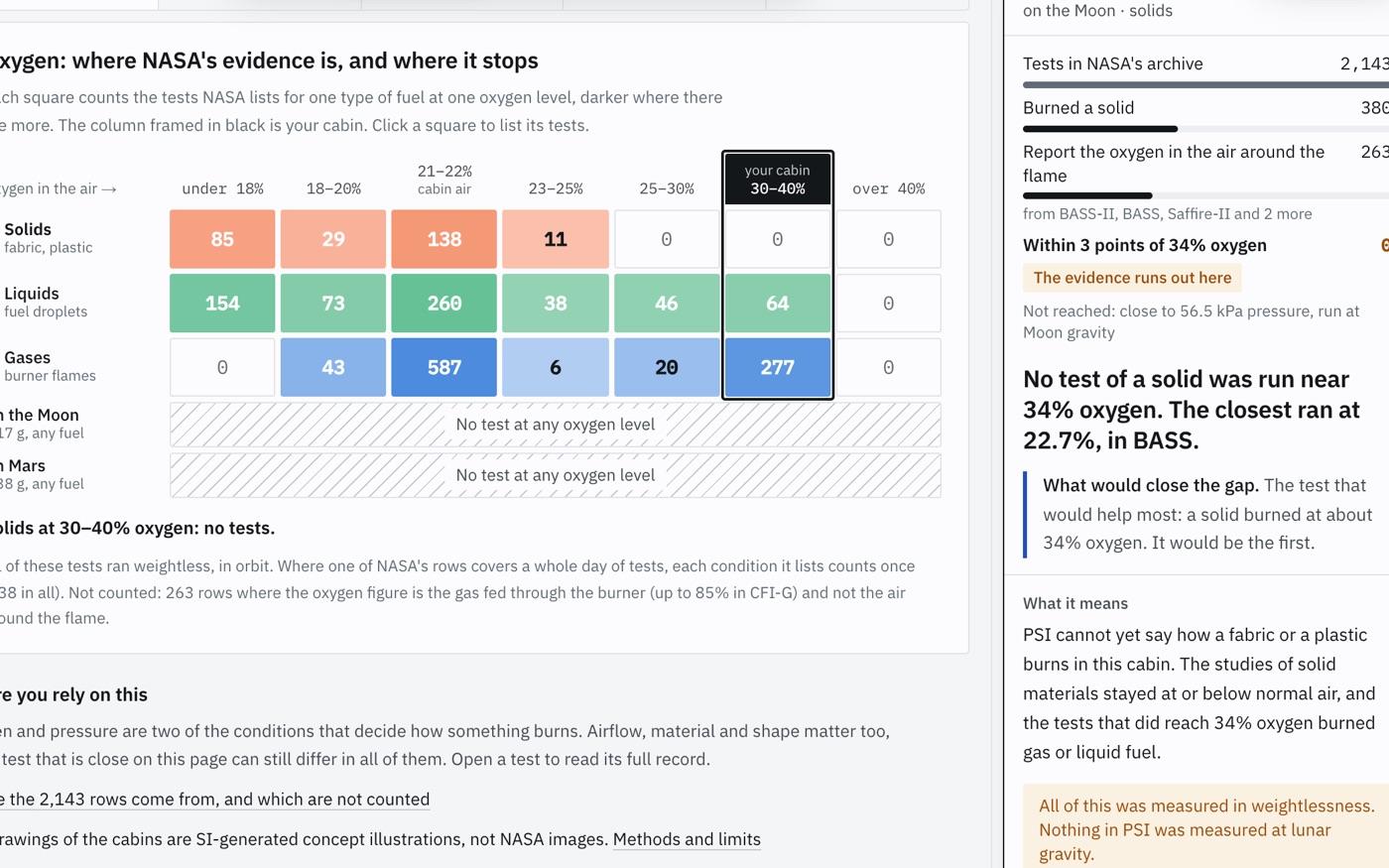 A question about one cabinDashboardDescribe a cabin. See which tests ran near it, where the evidence runs out, and what the SI makes of it.Open the dashboard
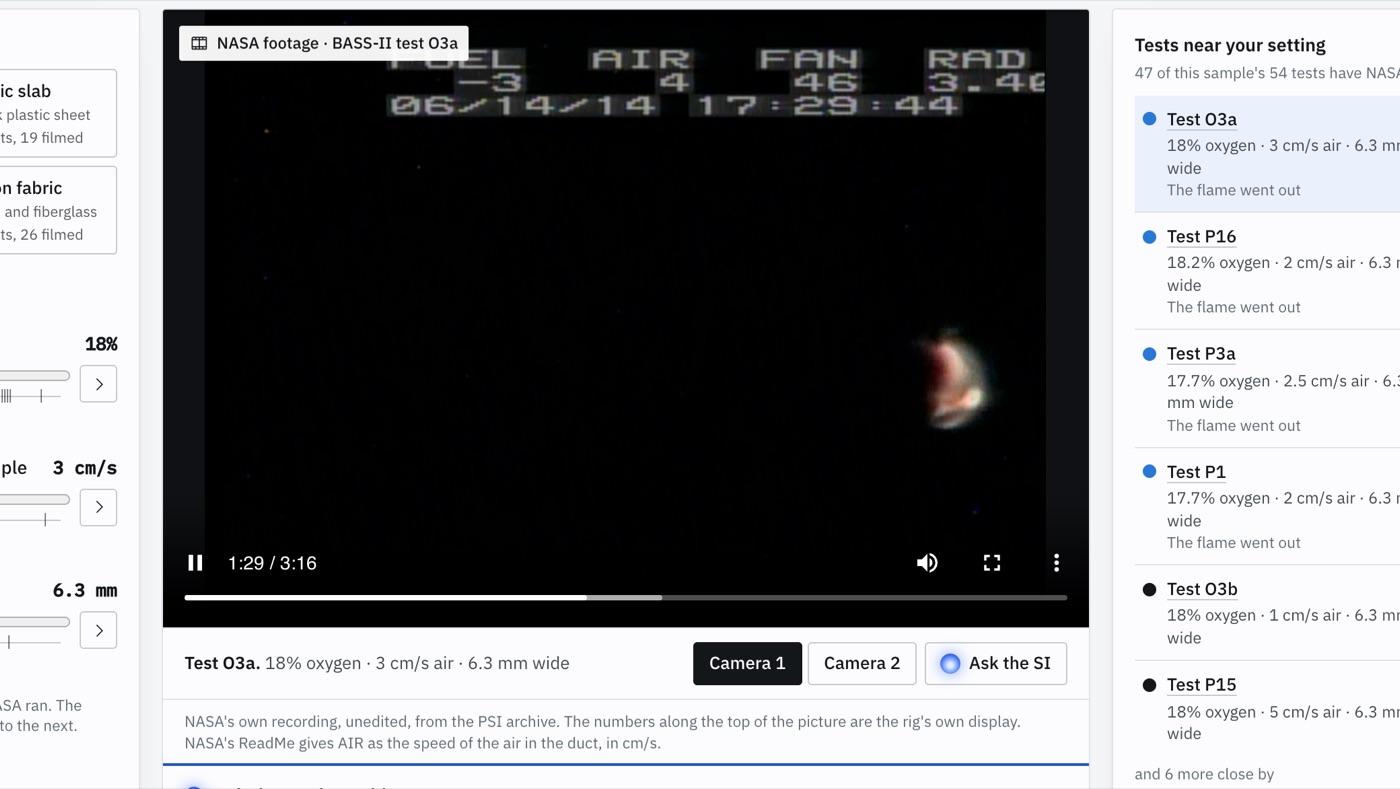 One test at a timeFlame LabSet the air around a plastic, a droplet or a gas flame and watch NASA's own video of the nearest test. 479 tests are on film.Watch real flames
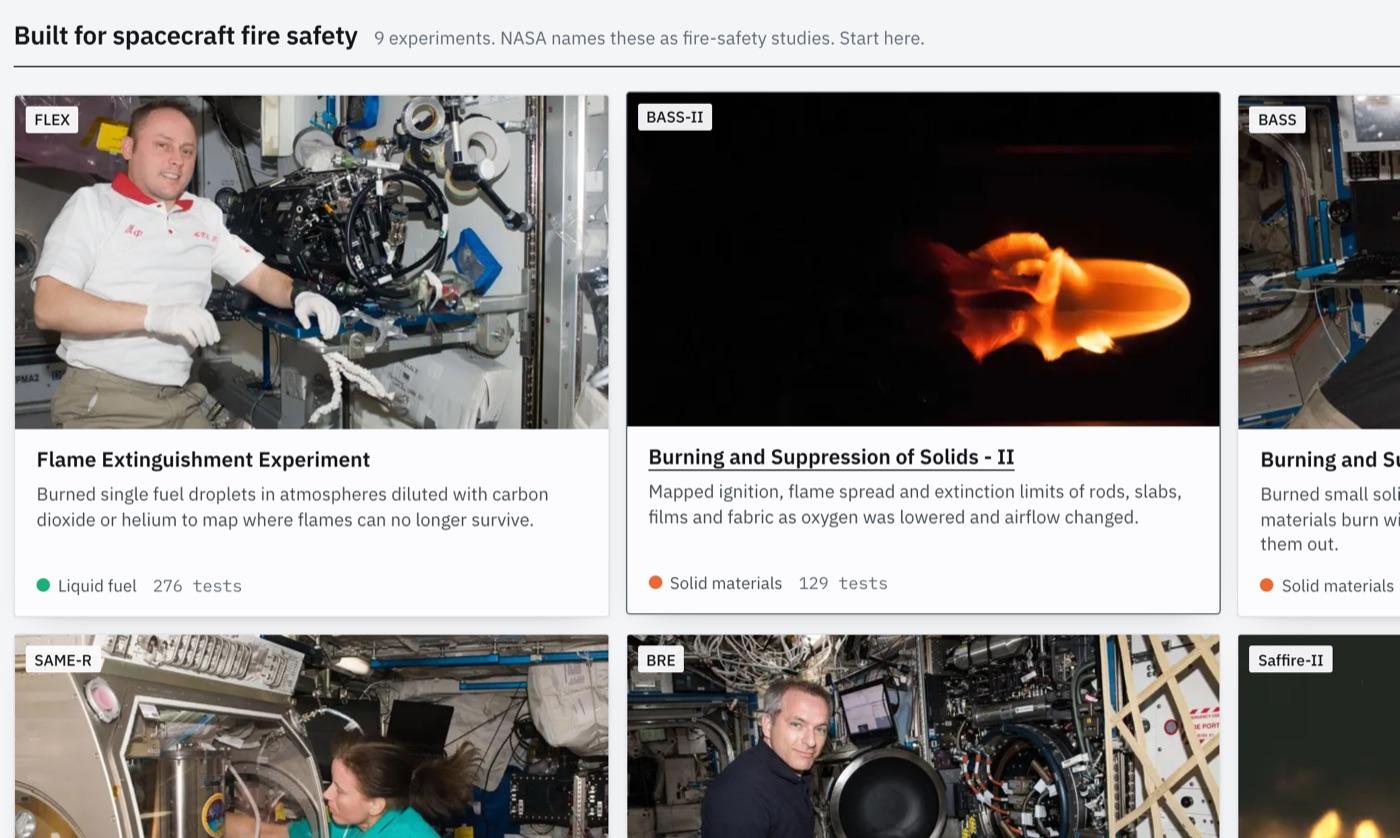 The archive itselfExplorerAll 24 experiments in plain words, fire safety in three moments, and every test row to filter and download.Browse the archive
Why not just ask a chatbot?
Ask how many solid-fuel tests ran near 34% oxygen and a chatbot has to guess, because that number is written nowhere. It has to be counted, across 25 NASA tables that use different columns and units. FlameLens did that work once, and shows it.
One value, traced to its cell
34%oxygen, in a BRE test on 2019 March 7
- NASA file
- PSI-20_Experimental table_ACME BRE.csv
- Row, column
- 5, “Oxygen Conc (percent)”
- Cell reads
- 3400%
- We show
- 34%, labelled “repaired”
The PSI table reads '3400%'. A percent format was applied to the number 34 in the PSI table; the column is already in percent.
Click any number on this site to open the same record for it.
Every value says how it was obtained
28,316values from 2,143 test rows
- PSI table20,902
- NASA text6,422
- Derived361
- Assumed579
- Repaired52
- The numbers are counted, not written. Every chart and count comes straight from the table.
- The SI can only read this table. Each figure it states is checked against what it looked up.
- Where NASA never tested, it says so. At 34% oxygen the archive runs thin.