Experiments / ACME burners
Basic flame science
s-Flame
Created one-dimensional spherical flames of hydrogen, methane and ethylene to test detailed chemistry and extinction models.
What burned
Gas
Ethylene, hydrogen / methane, hydrogen and 1 more
Where
On the space station
In orbit, where everything is weightless
How much data
18 test days
NASA's table lists days, each with several flames
What they changed between tests
- fuel and fuel blend
- diluent gas
- oxygen concentration
- flow rate
What it found
The measurements are designed as a strict test of flame simulations, including how flames go out.
NASA's words
“comprise a rigorous test of the detail” PSI record
Summarized by the SI. Each summary is tied to a quotation that the build checks against NASA's text. A matching quote is not a scientific review.
What it helps with
Stopping a fire from starting
Which materials burn, and in what air
Not an aim
Noticing a fire early
What smoke looks like to a detector
Not an aim
Putting a fire out
What makes a flame go out
Touches on it
For researchers: NASA's full recordThe conditions tested, every row of the table, NASA's description, publications and hardware
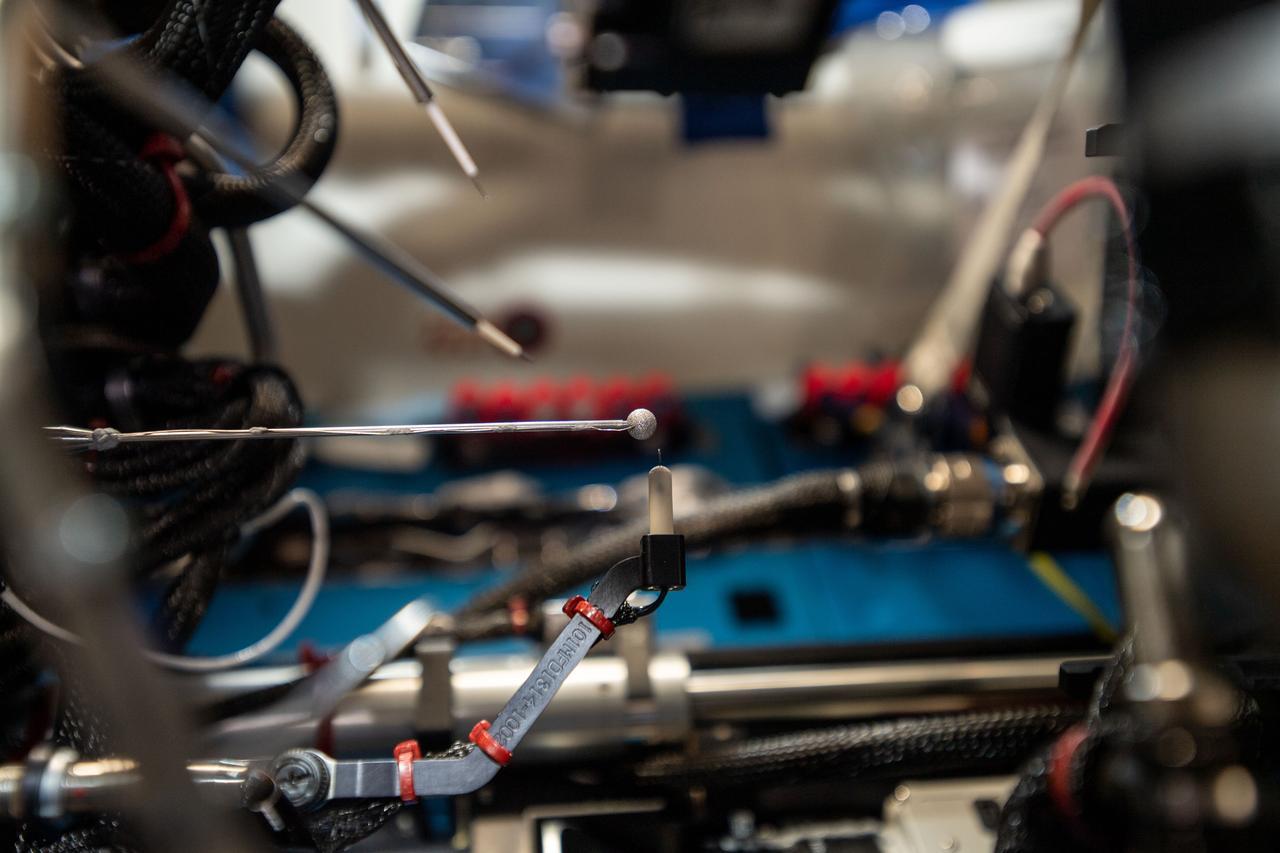
Shared hardware: Six gas-flame experiments shared one modular set of burners and diagnostics. Experiments that shared hardware share its limits, so their results can be compared directly.
Why it counts as fire-safety research
“Other combustion investigations within the PSI database (but not explicitly referenced above) are still relevant to fire safety, just not as strongly or directly.” NASA challenge statement
NASA's words behind each rating
- Prevention0 of 3
Not an aim of this investigation.
- Detection0 of 3
Not an aim of this investigation.
- Suppression1 of 3
“radiative/chemical-kinetic extinction limits (high system Damköhler numbers)”
Conditions covered
- Oxygen in the atmosphere
- 21% to 30%
- airMoon
- Pressure
- 101 kPa
- Moonsea level
- Flow speed
- not reported
- not in the PSI table
- Itemized rows
- 18
- 18 test days
Fuels and materials
ethylene (6), hydrogen / methane (5), hydrogen (4), methane (3)
Measurements named in the PSI record
- Flame imaging
- Radiometry
- Chemiluminescence
How the tests differ, and how they are the same
Worked out from the 18 rows of the PSI table. A variable that is not listed was not reported, which is different from being held fixed.
Changed from test to test
- Oxygen
- 21% to 30%
- Diluent
- 2 different values
- Fuel or material
- 4 different values
- Fuel fraction
- 20% to 100%
- Fuel diluent
- 2 different valuesreported in 14 of 18 rows
- Flames ignited
- 7 to 23
The same in every test
- Oxygen refers to
- ambient
- Pressure
- 101 kPa
- Fuel phase
- gas
- Geometry
- spherical burner
Rows from the PSI table
Click a row for the source of every value. Filter and export
| Record | Type | Fuel or material | Shape | Oxygen | Pressure | Flow, cm/s | Outcome | Date |
|---|---|---|---|---|---|---|---|---|
| Day 19254 | Test day | ethylene | spherical burner | 21% | 101 kPa | 2019-09-11 | ||
| Day 19256 | Test day | ethylene | spherical burner | 21% | 101 kPa | 2019-09-13 | ||
| Day 19304 | Test day | methane | spherical burner | 21% | 101 kPa | 2019-10-31 | ||
| Day 19308 | Test day | methane | spherical burner | 30% | 101 kPa | 2019-11-04 | ||
| Day 19352 | Test day | hydrogen | spherical burner | 21% | 101 kPa | 2019-12-18 | ||
| Day 20006 | Test day | hydrogen / methane | spherical burner | 21% | 101 kPa | 2020-01-06 | ||
| Day 20013 | Test day | hydrogen / methane | spherical burner | 21% | 101 kPa | 2020-01-13 | ||
| Day 20024 | Test day | hydrogen | spherical burner | 21% | 101 kPa | 2020-01-24 | ||
| Day 20029 | Test day | ethylene | spherical burner | 21% | 101 kPa | 2020-01-29 | ||
| Day 20132 | Test day | hydrogen / methane | spherical burner | 21% | 101 kPa | 2020-05-11 | ||
| Day 20136 | Test day | hydrogen / methane | spherical burner | 21% | 101 kPa | 2020-05-15 | ||
| Day 20142 | Test day | hydrogen / methane | spherical burner | 30% | 101 kPa | 2020-05-21 | ||
| Day 20155 | Test day | hydrogen | spherical burner | 21% to 30% | 101 kPa | 2020-06-03 | ||
| Day 20160 | Test day | methane | spherical burner | 21% to 30% | 101 kPa | 2020-06-08 | ||
| Day 20164 | Test day | ethylene | spherical burner | 30% | 101 kPa | 2020-06-12 | ||
| Day 20170 | Test day | ethylene | spherical burner | 21% to 30% | 101 kPa | 2020-06-18 | ||
| Day 20176 | Test day | ethylene | spherical burner | 21% to 30% | 101 kPa | 2020-06-24 | ||
| Day 20190 | Test day | hydrogen | spherical burner | 21% to 30% | 101 kPa | 2020-07-08 |
How the table was read, and what was repaired
s-Flame - test days
PSI-23_Experimental table_ACME s-Flame.csv
18 rows in the file, 18 kept as records. Session summary - one row per test day, listing the atmospheres used that day.
- *Test Day is formatted YYDDD where YY identfies year and DDD identifies day of year (GMT).
- *Atmosphere is ~1 atm but pressure increases and O2% drops with vitiation.
- *Flames Ignited is the number ignited on that day (neglecting the day change on ISS).
sha256 16cd10f50bd2e962887c8eb4077e5a9b3e790c78de8e0361c0b77e19300be7cf · fetched 2026-11-11
Repairs and warnings
- PSI's server cut this record off before the end. Every field up to the cut is used; later fields were filled from PSI's search index.
- Column 'Atmosphere*': 6 cell(s) were damaged by spreadsheet drag-fill (for example ~21% O2 with N3, ~21% O2 with N4, ~21% O2 with N5, ~21% O2 with N6) and were restored to the first value of each run.
- Column 'Fuel Bottle': 2 cell(s) were damaged by spreadsheet drag-fill (for example 50% C2H4 with N3, 45% CH4 with N3) and were restored to the first value of each run.
NASA's description
Objectives
A series of experiments is proposed with the following specific objectives, in both soot-free and sooty flames, to compare with detailed computational simulation to assess transport properties and detailed chemical kinetics (including chemiluminescence): Objective A. Measure and characterize the transient structure (such as temperature and species distribution) of diffusion flames established at initially non-steady, spherical flame structures for mixtures of different H2/CH4/diluent ratios (soot-free) and different C2H4/diluent ratios (sooty), for different flow rates. Objective B. Determine the quasi-steady convective/chemical-kinetic extinction limits (low system Damköhler numbers) and radiative/chemical-kinetic extinction limits (high system Damköhler numbers) for mixtures of different H2/CH4/diluent ratios (soot-free) and different C2H4/diluent ratios (sooty). Objective C. Determine the existence (for different Zeldovich number, Ze), onset (as a function Da), and nature (i.e. mode, frequency, amplitude) of pulsating instabilities theoretically predicted to occur in transient spherical diffusion flames using fuel/diluent mixtures that are above a critical Lewis number.
Approach
A series of experiments is proposed in which mixtures of various gaseous fuels and diluents will be issued into an oxidizing environment through a spherical porous burner and ignited to obtain, nominally, a spherical, one-dimensional stabilized flame. Synchronized measurements are to be made including spectrally resolved images, flame and burner temperatures, radiative flux measurements, and system operating conditions (including reactant flow rates, ambient temperatures, pressures and acceleration levels, etc.). These data are to be used for comparisons of flame behavior and structure with detailed numerical simulations of the flames. Conventional gaseous fuels including hydrogen, methane, and ethylene will be used. Hydrogen is the simplest fuel and its reaction mechanism is also reasonably established. Methane is the simplest hydrocarbon and extensive studies have been conducted on its combustion chemistry. Ethylene is a typical sooty fuel and is also an important intermediate for the oxidation of higher hydrocarbons. Diluents mixed with fuel are to include nitrogen and helium to adjust mixture diffusivities, and carbon dioxide to influence flame radiation characteristics.
Hypothesis
The transient numerical simulation of spherical flames developed as part of this program includes detailed chemistry and transport models, especially radiation mechanisms. Each description of the flames obtained from the experiment, including measurements of aspects of the flame structure, growth or flame front velocities, and the specific test conditions where steady state flames, flame extinctions, flame front instabilities, soot suppression limits, etc., comprise a rigorous test of the detailed model. Together they provide a measure of the comprehensiveness of the chemical kinetic and transport models. The numerical simulation is also being used as a predictive tool to develop the science requirements for this experiment, especially the collection of test conditions and most aspects of the measurement systems. Due to time and g-jitter limitations, little of the planned test matrix can be adequately explored in the ground based test facilities, and the flight experiment definition will rely on the best effort in the modeling work.
Research impacts and Earth benefits
The impact of this work consists of both practical and fundamental aspects. Practically, with diffusion flame burning as the basis in many combustion engines and devices, understanding the underlying dynamics and chemistry of diffusion flames is important in improving performance in terms of power, efficiency, pollutant emissions, and reliability. Fundamentally, the unique buoyancy-free environment offered by microgravity affords simple aerodynamic flow fields to acquire diffusion flame data of high fidelity, with the prospect of understanding unit thermochemical processes as well as quantifying the associated physico-chemical parameters.
Publications
44 listed in PSI, 37 with a DOI.
- Opportunities and challenges of combustion in microgravityLaw C.K., Faeth G.M.
- On burner-stabilized cylindrical premixed flames in microgravityEng J.A., Law C.K., Zhu D.L.
- On the structure, stabilization, and dual response of flat-burner flamesEng J.A., Zhu D.L., Law C.K.
- Extinction mechanisms of near-limit premixed flames and extended limits of flammabilitySung C.J., Law C.K.
- On the spreading of unsteady cylindrical diffusion flamesQian J., Law C.K.
- On the response of spherical premixed flames under rotationQian J., Bechtold J.K., Law C.K.
Show the other 38
- Role of flamefront motion and criterion for global quasi-steadiness in droplet burningHe Longtin, Tse Stephen D., Law Chung K.
- On micro-buoyancy spherical diffusion flames and a double luminous zone structure of the hydrogen/methane flameSung C.J., Zhu D.L., Law C.K.
- Structure, aerodynamics, and geometry of premixed flameletsLaw C.K, Sung C.J
- Microgravity burner-generated spherical diffusion flames: experiment and computation‡‡Currently at Department of Mechanical and Aerospace Engineering, Case Western Reserve University, Cleveland, OH 44106.Tse Stephen D, Zhu Delin, Sung Chih-Jen, Ju Yiguang, Law Chung K
- Chemiluminescent OH* and CH* flame structure and aerodynamic scaling of weakly buoyant, nearly spherical diffusion flamesYoo S.W., Law C.K., Tse S.D.
- Oscillatory extinction of spherical diffusion flames: Micro-buoyancy experiment and computationYoo S.W., Christiansen E.W., Law C.K.
- Development of Comprehensive Detailed and Reduced Reaction Mechanisms for Combustion ModelingLaw C. K., Sung C. J., Wang H., Lu T. F.
- Response of spherical diffusion flames under rotation with general Lewis numbersYoo S. W., Qian J., Bechtold J. K., Law C. K.
- Porous spherical burner for combustion experimentationYoo Sean W., Zhu Delin, Law Chung K.
- On intrinsic oscillation in radiation-affected diffusion flamesWang H.Y., Law C.K.
- Effects of variable density on response of spherical diffusion flames under rotationYoo S.W., Law C.K.
- A mechanistic study of Soret diffusion in hydrogen–air flamesYang F., Law C.K., Sung C.J., Zhang H.Q.
- Self-similar accelerative propagation of expanding wrinkled flames and explosion triggeringAkkerman V’yacheslav, Law Chung K., Bychkov Vitaly
- Response of spherical diffusion flames subjected to rotation: Microgravity experimentation and computational simulationYoo Sean W., Chaudhuri Swetaprovo, Sacksteder Kurt R., Zhang Peng, Zhu Delin, Law Chung K.
- Fuel Options for Next-Generation Chemical PropulsionLaw Chung K.
- A mechanistic evaluation of Soret diffusion in heptane/air flamesXin Yuxuan, Sung Chih-Jen, Law Chung K.
- An experimental investigation on self-acceleration of cellular spherical flamesWu Fujia, Jomaas Grunde, Law Chung K.
- Initiation and propagation of laminar premixed cool flamesZhao Peng, Liang Wenkai, Deng Sili, Law Chung K.
- On colliding spherical flames: Morphology, corner dynamics, and flame-generated vorticityYang Sheng, Zhu Delin, Law Chung K.
- Extended flammability limits of n-heptane/air mixtures with cool flamesLiang Wenkai, Law Chung K.
- Theory of first-stage ignition delay in hydrocarbon NTC chemistryLiang Wenkai, Law Chung K.
- Direct Numerical Simulation of turbulent nonpremixed “cool” flames: Applicability of flamelet modelsNovoselov Alex G., Law Chung K., Mueller Michael E.
- On Radical-Induced Ignition in Combustion SystemsLiang Wenkai, Law Chung K.
- Binary collision of a burning droplet and a non-burning droplet of xylene: Outcome regimes and flame dynamicsXiong Gang, Gandhi Rahul, Zhong Xiaosheng, Mädler Lutz, Tse Stephen D.
- Stabilization mechanisms and burning rates of cylindrical burner flamesEng J., Law C., Zhu D.
- On burner-supported, spherical diffusion flames under micro-buoyancy conditionsSung C., Zhu D., Tse S., Law C.
- Microgravity burner-generated spherical diffusion flames - Experiment and computationSD Tse, DL Zhu, CJ Sung, CK Law
- Thin-Flame Theory for Droplet Combustion at Low Grashof NumbersChen Shr-Jing, Tse Stephen
- Nonlinear Analysis of Pulsating Instabilities in Diffusion FlamesWang Heyang, Bechtold John, Law Chung
- An Experimental Study on the Response of Spherical Diffusion Flames Subjected to Rotation and NonequidiffusionZhu Delin, Yoo Sean, Law C, Sacksteder Kurt
- A Mechanistic Study of Soret Diffusion in Hydrogen-Air FlamesYang Fan, Law C.K., Sung C.J., Zhang Huiqiang
- A comprehensive evaluation of soret diffusion in heptane-air flamesYX Xin, CJ Sung, CK Law
- Dynamics and morphology of spherical diffusion flames under rotationS Yoo, S Chaudhuri, K Sacksteder, P Zhang, D Zhu, C Law
- Dynamics and morphology of colliding spherical flamesS Yang, S Chaudhuri, D Zhu, CK Law
- On the structure and dynamics of stationary and rotating spherical diffusion flamesSW Yoo
- Weakly Buoyant Spherical Diffusion Flames: Properties of Hydrogen-CO Ethylene FlamesL Paxton
- Computational Simulation of Spherical Diffusion Flame Dynamics and Extinction in MicrogravityT Xia
- Combustion Science: A Researcher's Guide to International Space StationSA Gokoglu, DL Dietrich, DP Stocker, PV Ferkul, SL Olson
Hardware and raw data
782 GB of raw data on PSI: reports 2, raw data 4,058, presentations 17, reference data 50, science documents 7, engineering documents 29. FlameLens reads the experimental table, not the raw video or sensor files.
On Earth
Cleaner combustion: Better engine and burner performance through validated flame chemistry.
“improving performance in terms of power, efficiency, pollutant emissions, and reliability”